
A Little to the Left: Drawers
Secret Mode LtdPuzzle
4.880.00 Reviews
- Version
- 3.6.0
- Installs
- 10.00K
- Age Rating
- Everyone
Screenshots
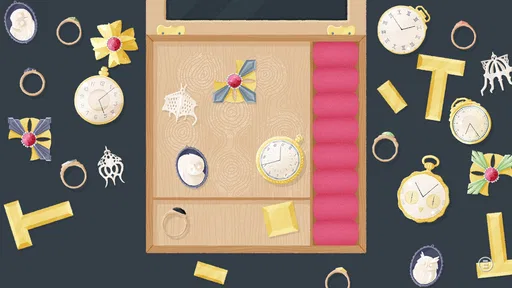
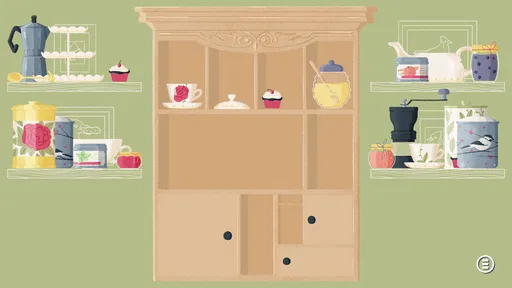




Our Review of A Little to the Left: Drawers
 Analysis by Appyee
I find this kind of puzzle most appealing when I want something quiet that still gives my attention a job to do. A Little to the Left: Drawers takes the familiar act of sorting small objects and turns it into a set of visual problems: look closely, notice how things relate, and try an arrangement that feels right. That makes it a very different break from a fast action game or a word puzzle built around a clock. I can settle into one drawer without needing to be in a competitive mood, and the calm premise is a genuine part of its appeal.
It is a paid puzzle game from Secret Mode Ltd, priced at $2.99, and its age rating is Everyone. It was released on February 14, 2025, and the current version is 3.6.0, with Android 10 as the minimum operating system requirement. The game has a 4.8 average from around 1,900 ratings, and more than 10,000 installs. Those figures suggest that it has found an audience, but the useful question for me is whether its particular kind of slow, visual problem-solving suits the way you like to play.
Finding the clues in each drawer
The premise of A Little to the Left: Drawers is beautifully simple. Imagine your favorite pastime of organizing a cluttered drawer, but without the hassle of actually having to tidy up your real-life mess. The game invites you to sort, arrange, and stack items until everything looks just right. It’s strangely satisfying, like putting the last piece of a puzzle in place.
The design is minimalist, with a soothing color palette that’s easy on the eyes. The developers have nailed the art of creating a calm and engaging atmosphere, which makes playing feel more like a gentle meditation session than a high-stakes brain teaser.
Readability and navigation: a quiet visual puzzle
So, how does it all work? Each level presents you with a new drawer filled with miscellaneous items. Your task is to arrange them in a way that matches the subtle clues provided. It’s not as easy as it sounds! Each object has its own little quirks, and you’ll need to think a bit outside the box—or should I say, drawer—to get it just right.
When I approach a scene, I get more from examining the whole layout before moving anything than from immediately dragging objects around. The puzzle often depends on relationships between items, not simply on clearing space: position, orientation, and the visual pattern can all matter. A practical habit is to pause and compare the objects first, then make one deliberate change at a time. That keeps experimentation readable and makes it easier to spot which move actually improved the arrangement.
The levels range from simple to delightfully complex, and there’s a real sense of accomplishment when you finally figure out the perfect setup. Plus, the game doesn’t penalize you for taking your time, which is a refreshing change from the usual mobile game fare. You’re free to experiment and play at your own pace.
Motor and sensory considerations
The gentle pace removes one common source of pressure: there is no need to make a quick decision just because a timer is ticking. I appreciate that, especially when I’m playing in short breaks or when I don’t have the energy for a game that demands constant reactions. The focus is on noticing and arranging rather than reflexes, so it can suit players who prefer deliberate tasks to fast controls.
That said, a visual sorting puzzle still asks for sustained looking and careful touch input. If a particular scene feels hard to parse, I’d take a break and return with fresh eyes rather than keep making random moves. On a phone, I also find it sensible to play somewhere I can hold the device steadily; small objects and close arrangement work are less comfortable when I’m trying to play while walking or juggling other things. Calm pacing helps, but it does not remove the visual and motor demands of manipulating a detailed scene.
Situational access: fitting a puzzle into the day
If you’re someone who gets a thrill from organizing or if you find joy in the little details, this game is going to be right up your alley. It’s like a safe space for all the perfectionists out there to indulge in their love for order without judgment. And even if you’re not naturally inclined towards tidiness, the game has a way of gently coaxing out your inner organizer.
What makes this game special is not just its unique concept, but its ability to engage players of all ages. It’s a game that you can play for five minutes or an hour, depending on how much time you’ve got to spare. And because it’s so intuitive, there’s virtually no learning curve.
A realistic fit is a quiet ten-minute pause at home, perhaps while waiting for a kettle or after finishing a task that has left your mind scattered. I can play a little, stop when another responsibility calls, and come back when I’m ready to look carefully again. It is less suited to a noisy commute, a bright outdoor queue where screen glare makes details harder to inspect, or a moment when I need to keep my eyes on my surroundings. Unlike a spoken podcast, this puzzle cannot hold my attention while my hands and gaze are committed elsewhere.
Where it differs from other puzzle games
Compared with a typical match-three game, a word grid, or a number puzzle, this one is less about chasing a score and more about making a scene look coherent. That is its strength if you like visual details and tactile-feeling tasks; it is also the trade-off. Someone who wants a stream of quick wins, a leaderboard to chase, or a puzzle that can be solved mostly by reading text may find those other formats more satisfying.
The organizing theme can also make the right answer feel subjective at first. I recommend treating the objects and their placement as clues rather than assuming that the tidiest-looking arrangement is automatically the intended one. If a solution does not come, step back and look for a repeated shape or a relationship between pieces before trying a completely different layout. That small change in approach makes the puzzles feel less like guesswork and more like observation.
Remaining barriers and who may want another game
There are limits to who will enjoy this style. If you dislike sorting, close visual inspection, or repeated small adjustments, the central activity may feel more like a chore than a relaxing escape. A player who wants a strong narrative, a constantly changing pace, or a conventional logic format may be better served by another puzzle game. It is also not the choice I’d make when I want something I can play without looking at the screen.
Before buying, I would ask myself whether I enjoy interpreting a visual scene and whether I’m comfortable with a paid game built around that focused activity. The $2.99 price is a clear upfront cost rather than an invitation to judge the game by a free download alone. If the idea of arranging drawers sounds satisfying, that is a good sign; if it sounds tedious, a different puzzle style is a safer fit. The Everyone rating makes it suitable for a broad age range, though a player’s patience for careful visual tasks matters more than age here.
An inclusive verdict on a small, focused game
At the end of the day, A Little to the Left: Drawers is more than just a game. It’s a delightful escape from the chaos of daily life. Whether you’re unwinding after a long day or you’re just looking for something to keep your hands busy, this game delivers a perfect blend of relaxation and challenge.
So, if you’re ready to dive into a world where everything has its place, I highly recommend giving this game a try. It's available for both Android and iOS, so you can organize to your heart’s content no matter what device you’re using.
In short, A Little to the Left: Drawers is a lovingly crafted game that’s sure to bring a smile to your face. It’s a gentle reminder that sometimes, the little things in life can bring the most joy.
My recommendation in practice
I’d recommend this to someone who likes gentle, hands-on puzzles and wants a self-contained activity rather than a game that constantly asks for attention. Its strongest everyday use is a deliberate pause: sit down, focus on one small arrangement, and stop when you feel done. The absence of time pressure supports that use, but the need to inspect and move objects means it is not automatically accessible in every setting or for every player.
For a final practical check, think about how you usually play on your phone. If you can comfortably see small details, make careful touch adjustments, and enjoy testing visual ideas, this is an appealing niche puzzle. If you need larger, high-contrast text, audio-led play, or controls that demand very little precision, I would choose a different kind of game. My recommendation is therefore warm but specific: it is a thoughtful fit for patient visual puzzlers, not a universal relaxation app.
Verdict
Strengths of A Little to the Left: Drawers
- Intuitive interface for easy navigation.
- Challenging puzzles that keep you engaged.
- Visually appealing graphics and design.
- Smooth performance with minimal lag.
- Frequent updates with new levels.
Limitations of A Little to the Left: Drawers
- Limited free levels; pay for full access.
- No multiplayer mode available.
- Occasional repetitive puzzle elements.
- In-game hints are limited and costly.
- Requires internet connection for updates.
Other Releases by Secret Mode Ltd
View All
A Little to the Left: Stars
Puzzle4.9
Similar Picks in This Category
View All
Block Blast!
HungryStudio4.8

Braindom: Brain Games Test
Lahana Game Studio4.6

AMAZE!
CrazyLabs LTD4.6

Sudoku - Classic Sudoku Puzzle
Oakever Games4.7

Art Puzzle - Puzzle Games
Easybrain4.8

Amaze GO!
Oakever Games4.9
Frequently Asked Questions
What is 'A Little to the Left: Drawers' about?
'A Little to the Left: Drawers' is a unique puzzle game that revolves around organizing drawers and spaces in a visually satisfying way. Players are tasked with rearranging items to achieve harmony and order, providing a relaxing yet mentally stimulating experience. The game’s charming visuals and intuitive mechanics make it ideal for casual gamers seeking a soothing escape.
Is 'A Little to the Left: Drawers' available on both Android and iOS?
Yes, 'A Little to the Left: Drawers' is available for download on both Android and iOS platforms. You can find it on the Google Play Store for Android devices and the Apple App Store for iOS devices, ensuring accessibility for a wide range of mobile users.
Does the game require an internet connection to play?
No, 'A Little to the Left: Drawers' does not require an internet connection to play. It is designed to be enjoyed offline, making it an excellent option for users who want to play during travel or in areas with limited connectivity, ensuring uninterrupted gameplay.
Are there any in-app purchases or ads in the game?
While 'A Little to the Left: Drawers' offers a free-to-play experience, it does include optional in-app purchases that enhance gameplay or unlock additional features. The game also features ads, but they are implemented in a way that does not detract from the overall user experience.
What age group is 'A Little to the Left: Drawers' suitable for?
The game is suitable for a wide audience, including children and adults. Its simple controls and engaging puzzles make it particularly appealing to players who enjoy light-hearted and stress-free gaming. However, due to its calming nature, it is especially recommended for those seeking a relaxing pastime.
Play our best games!


